Everything you need to move data safely
Mapping, transformation, scheduling, dependencies and monitoring — in one place, in plain language.
HOW IT WORKS
Two platforms in, one synced system out
The same four steps whether you’re syncing customers, invoices, jobs or anything in between.
- STEP 1
Connect
Authenticate both platforms with OAuth or an API key. No credentials ever touch our servers unencrypted.
- STEP 2
Map
Review a suggested field mapping between both objects — approve the confident matches, decide the rest.
- STEP 3
Automate
Set the direction, a schedule, and any dependencies. synkazo runs the rule from then on.
- STEP 4
Monitor
Watch every run land, with plain-language reasons for anything that needed attention.
MAPPING
Map hundreds of fields in minutes, not days
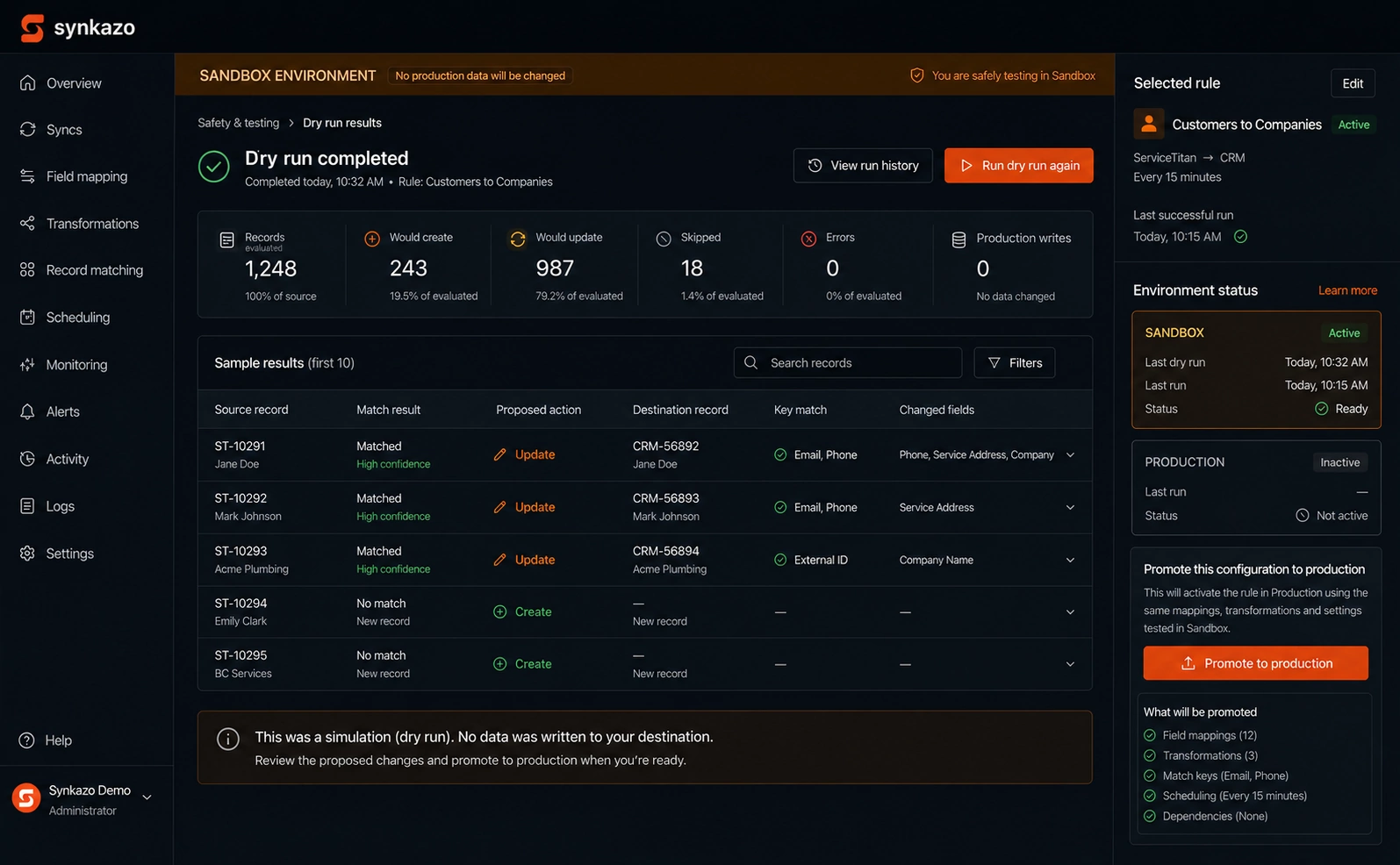
synkazo compares both platforms field by field — matching on name, alias and data type — and proposes a mapping for every field it is confident about. You only step in for the ones that need a human call: ambiguous names, mismatched types, or fields with no obvious match on the other side. On a typical ServiceTitan-to-HubSpot object, that covers roughly 90% of fields automatically.
Confidence score on every suggested match
Bulk-approve everything above a threshold you set
Searchable picker with live preview for the rest
TRANSFORMATION
Reshape data as it moves, with no code
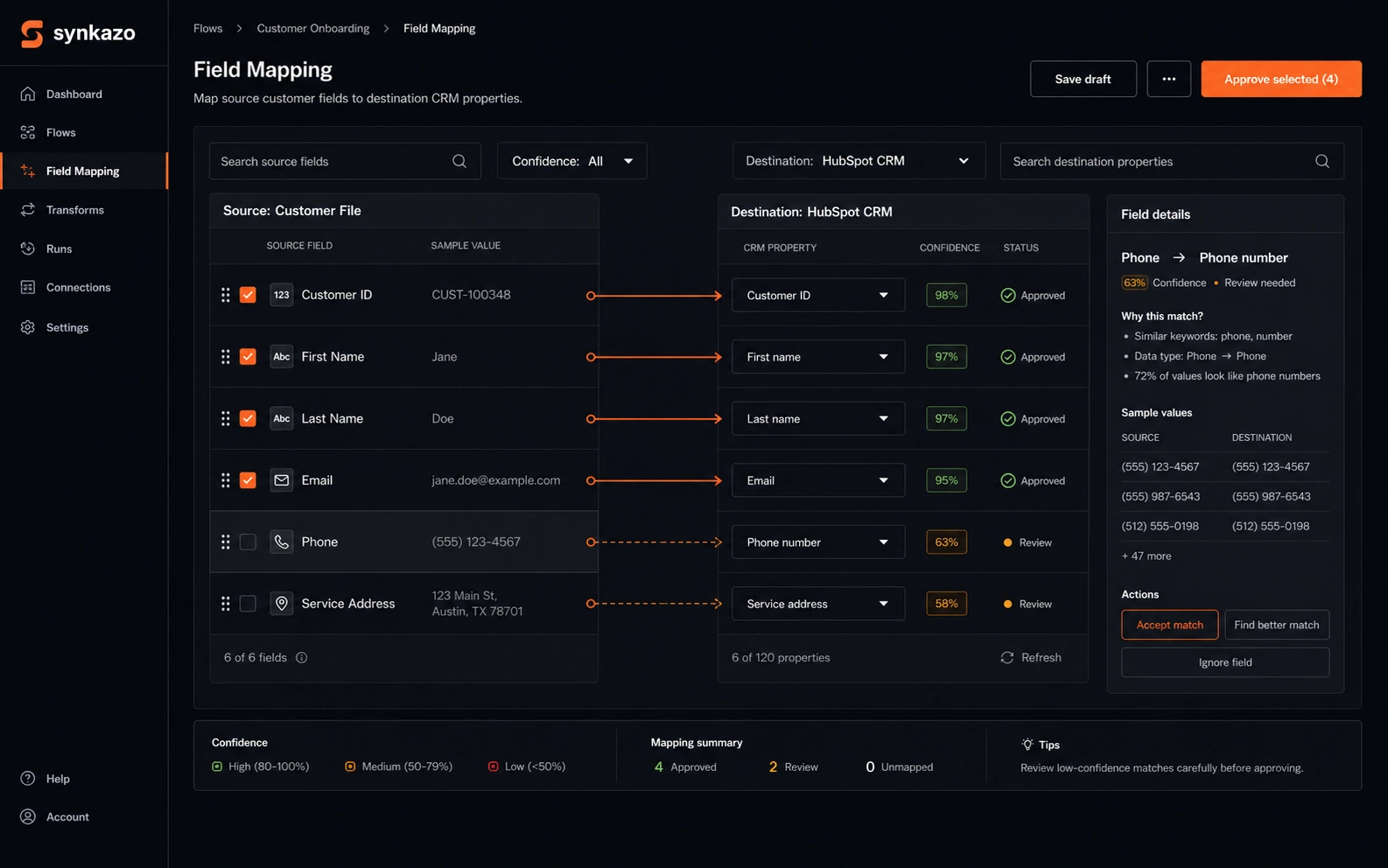
Source and destination platforms rarely agree on formats. Stack simple rules — split a full name into first and last, join address lines, turn a status code into a friendly label, reformat a phone number — and see the exact before-and-after on real records before you save anything.
Text, number, date and boolean rules
Split and merge fields across either side
Stack rules in order, preview live before saving
RECORD MATCHING
Update the right record, never a duplicate
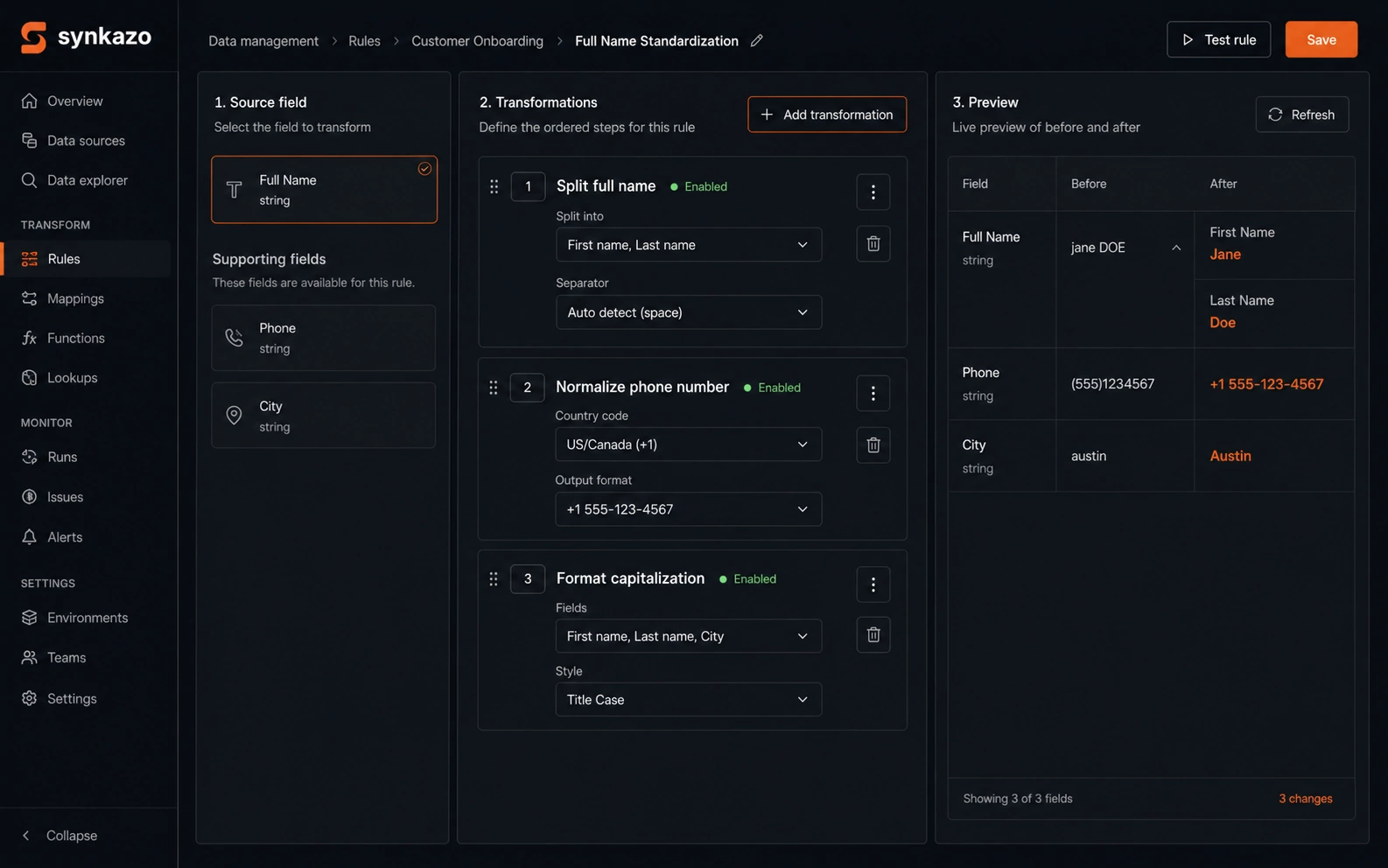
Before writing anything, synkazo checks whether the record already exists on the other side — by email, phone, external ID, or a combination you choose — and updates it in place. That is the difference between a sync tool and a real integration: no duplicate contacts, no orphaned companies, no manual cleanup afterward.
Update instead of duplicate, every time
Any field, or combination of fields, can be the key
Composite match keys for messier schemas
SCHEDULING
Run every sync rule on its own clock, in the right order
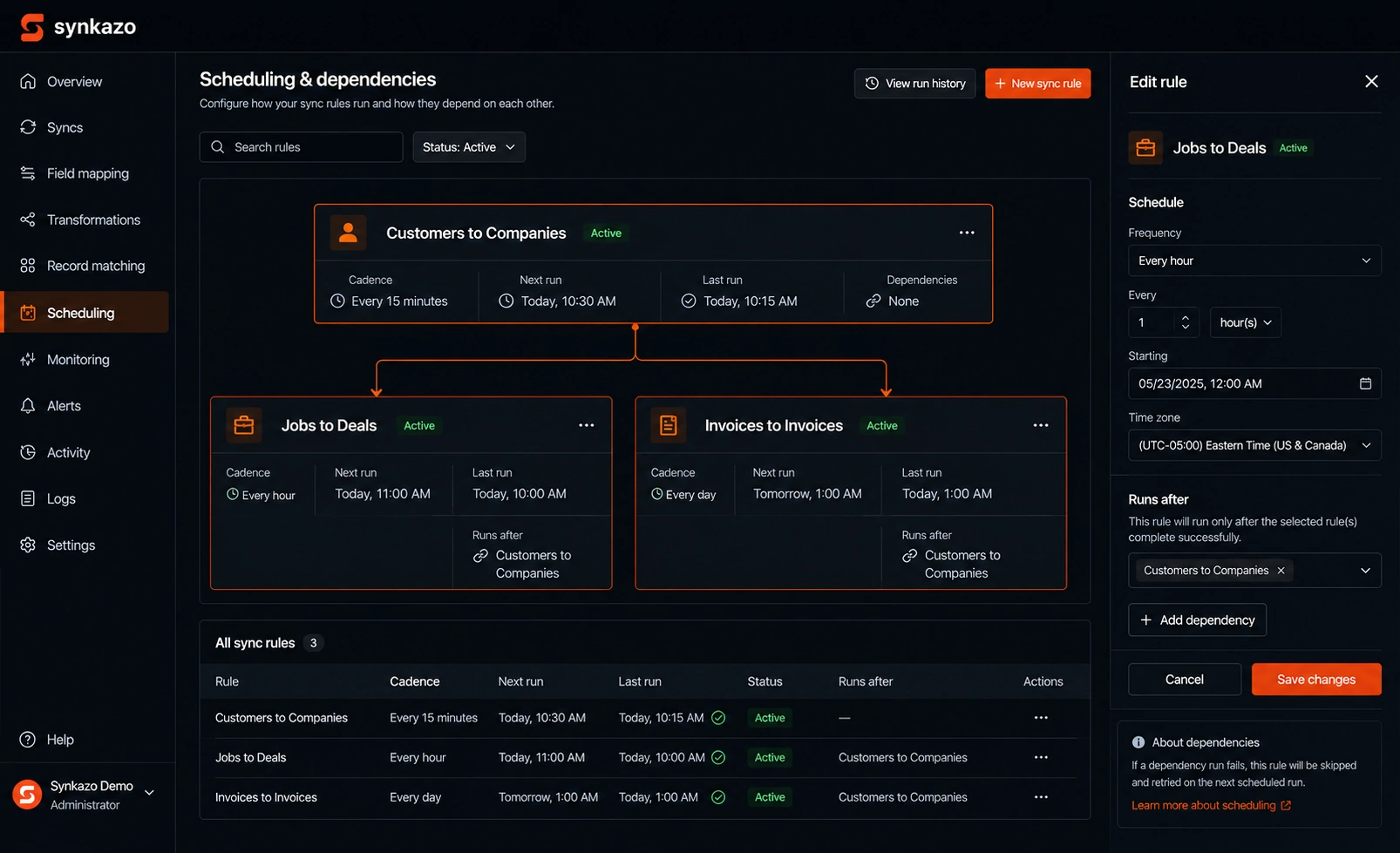
A customer sync might need to run every 15 minutes while an invoice sync only needs to run once a day. Give each rule its own schedule, and where one depends on another — companies must exist before deals can attach to them, for example — mark that dependency once and synkazo enforces the order automatically.
Presets from 15 minutes to weekly, or full cron
Runs-after dependencies, including multiple parents
A project-level view of every rule and its order
VISIBILITY
Know exactly what synced, and why anything did not
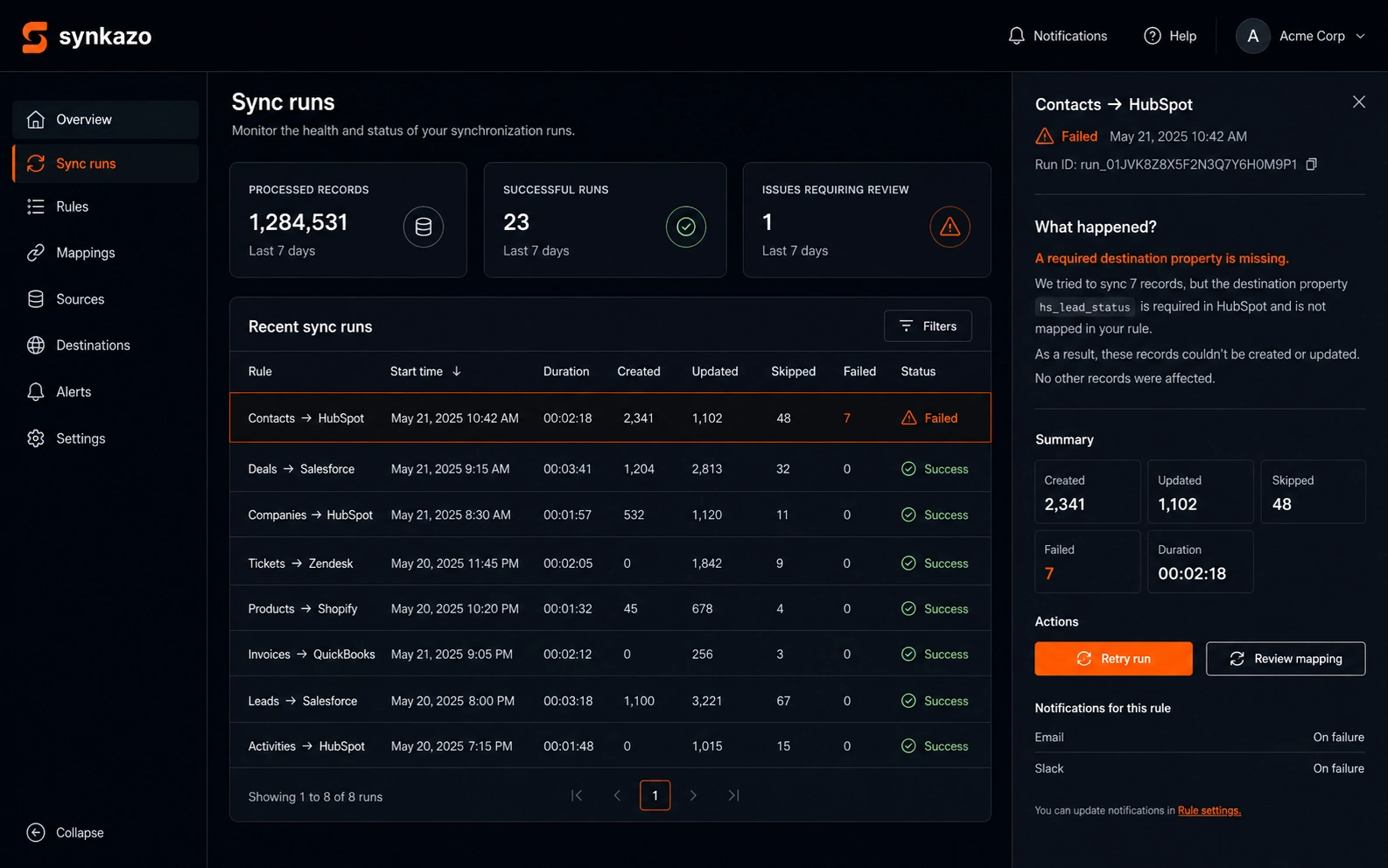
Every run is logged with counts of what was created, updated and skipped — and if something fails, synkazo explains why in plain language, not a stack trace. Automatic retries catch transient issues; anything that persists pages you by email or Slack before it becomes a bigger problem.
Created, updated and skipped counts per run
Automatic retries on transient failures
Email and Slack alerts on anything that needs you
SAFETY
Prove it works before it touches production
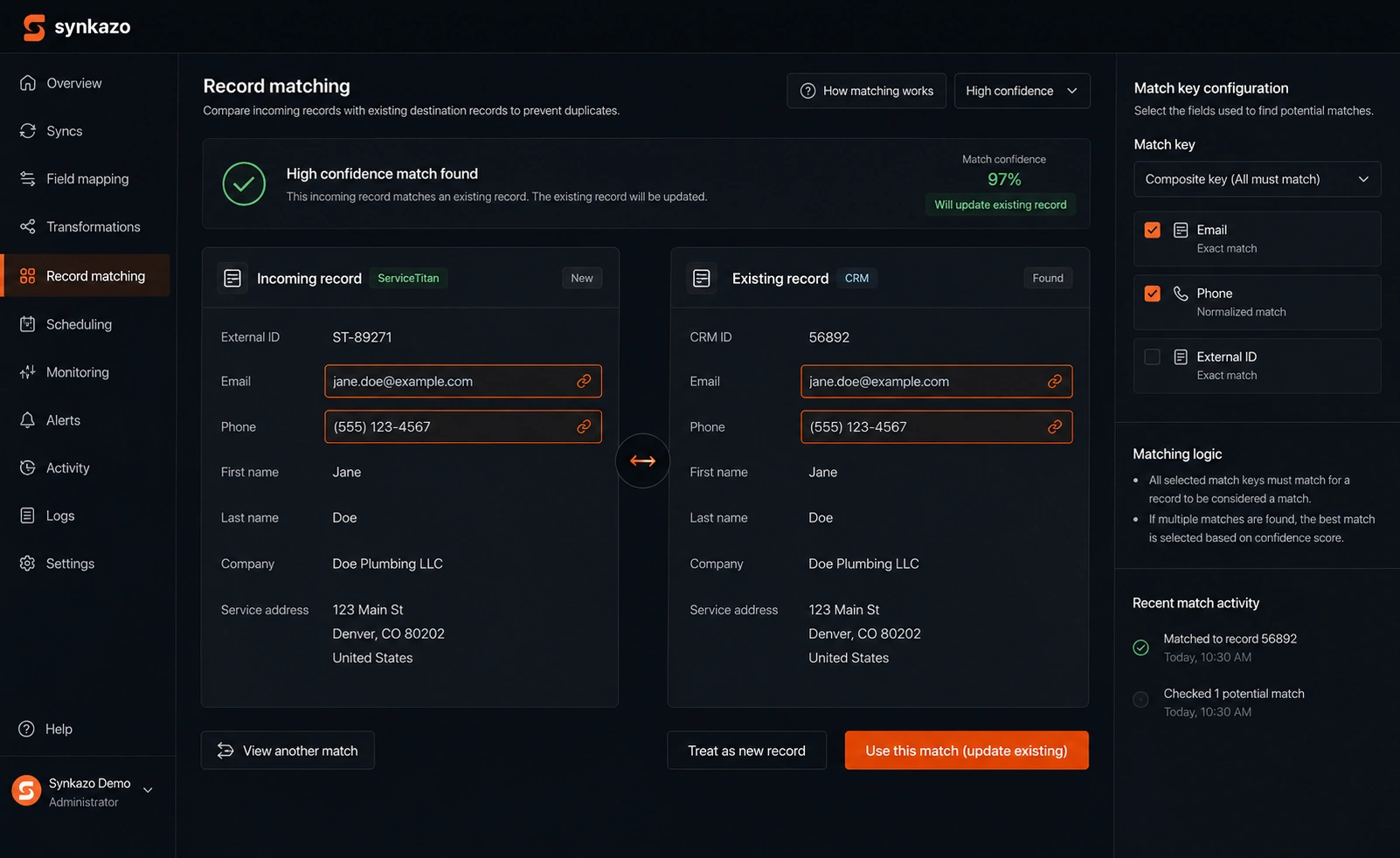
Connect sandbox credentials for either platform and run your sync rules exactly as configured, without writing a single real record. Once you are confident, promote the same configuration to production with one click — no re-mapping, no re-testing from scratch.
Separate sandbox credentials per platform
Dry-run any sync rule on demand
One-click promote from sandbox to live