You're spending £5,000–$20,000 a month on marketing.
Google Ads are running. Local Services Ads are bringing calls. Your social campaigns are generating clicks. Your email campaigns are sending.
Then your marketing manager opens HubSpot and shows you the dashboard.
Leads are up. Traffic is up. Form submissions look great.
Everyone feels good.
Until you ask one simple question:
Which marketing campaign generated the completed furnace installations that actually made us money this week?
Silence.
Not because the team isn't doing its job. Because the answer is sitting in another system.
That's the real problem with HubSpot attribution for many trades businesses:
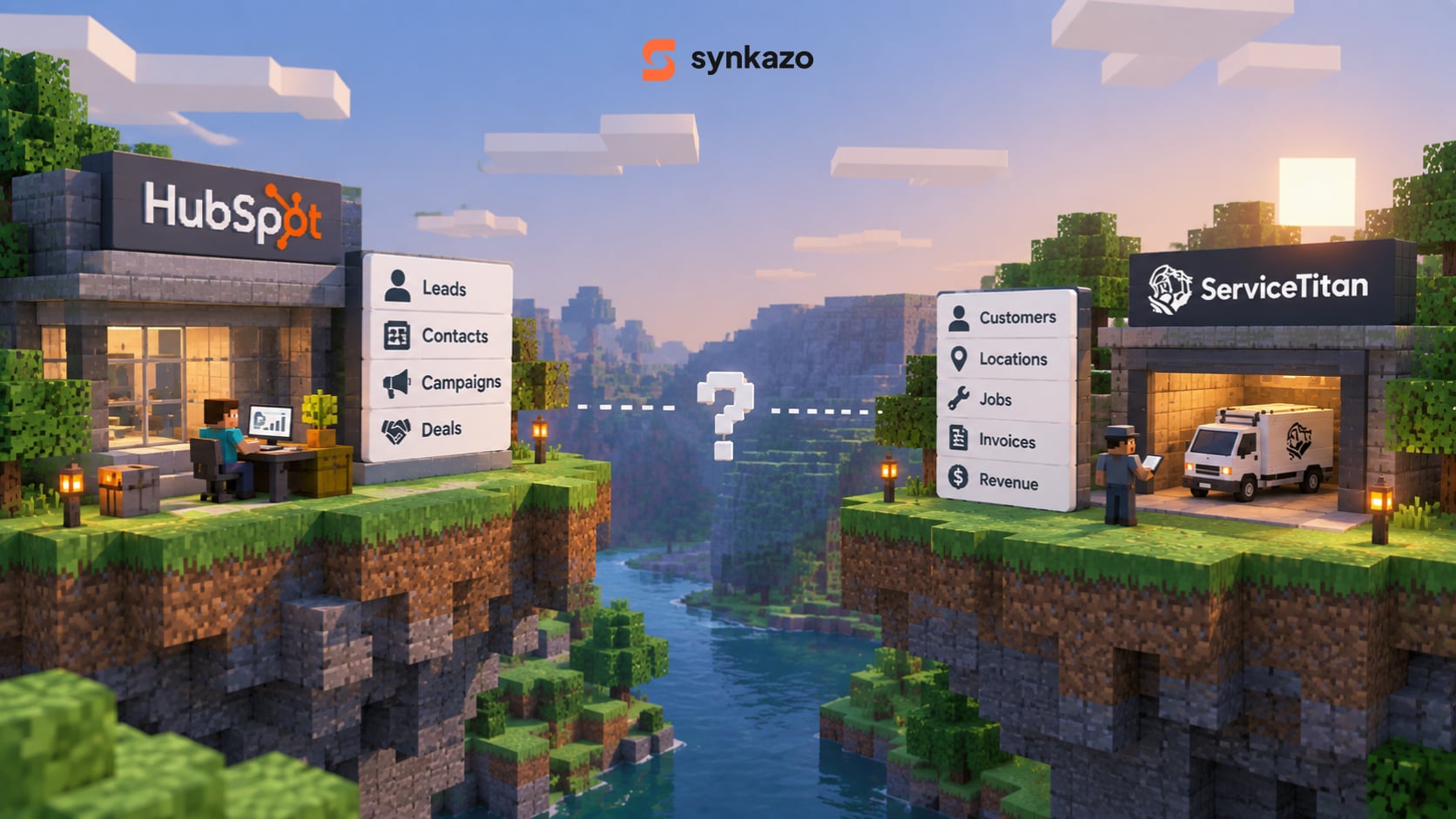
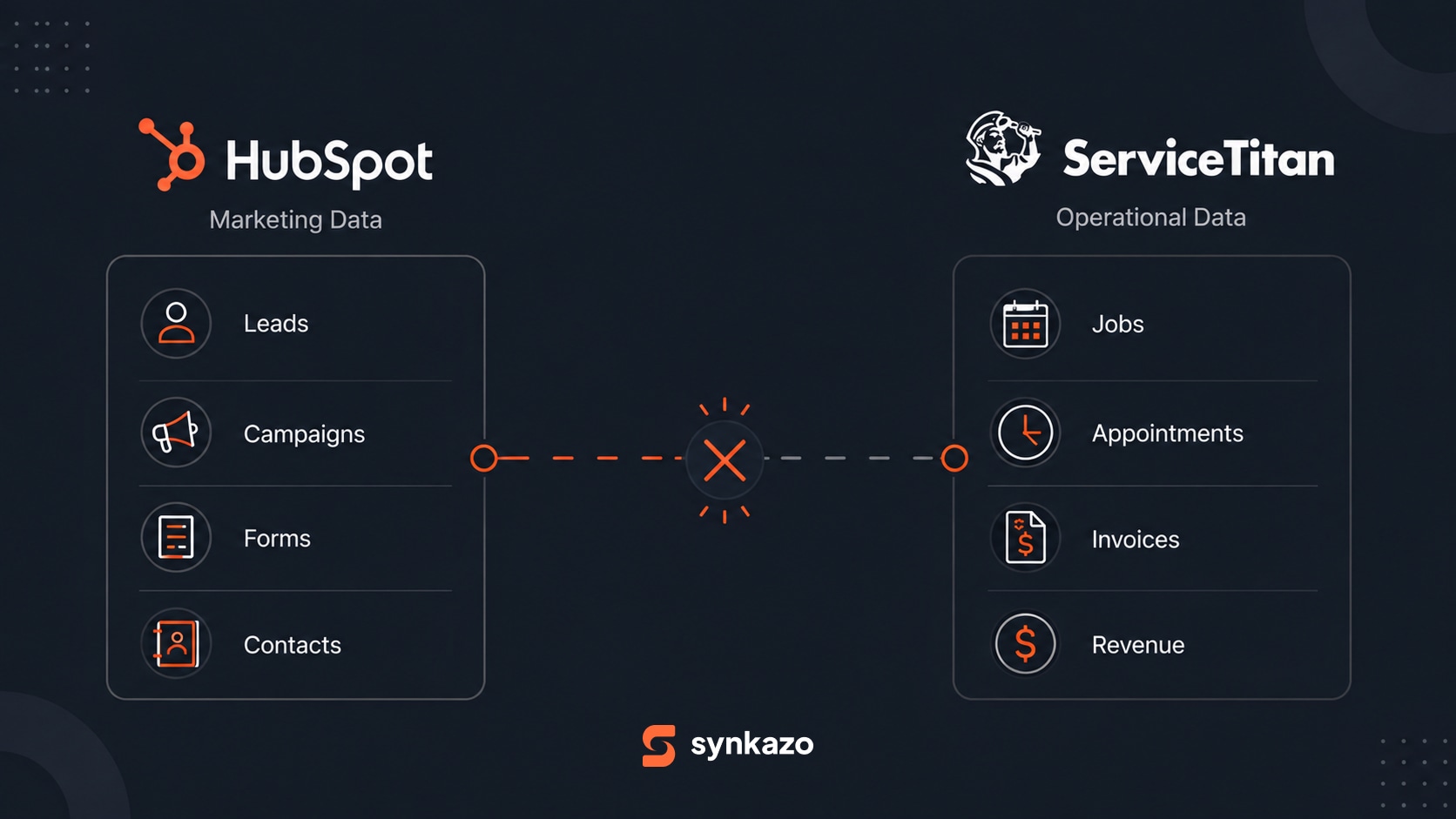
Your marketing data and your revenue data are living in two different worlds.
And until those worlds are connected, your attribution can look impressive while telling you very little about actual ROI.
The split-brain problem
Think about what happens inside a typical HVAC, plumbing, or electrical business.
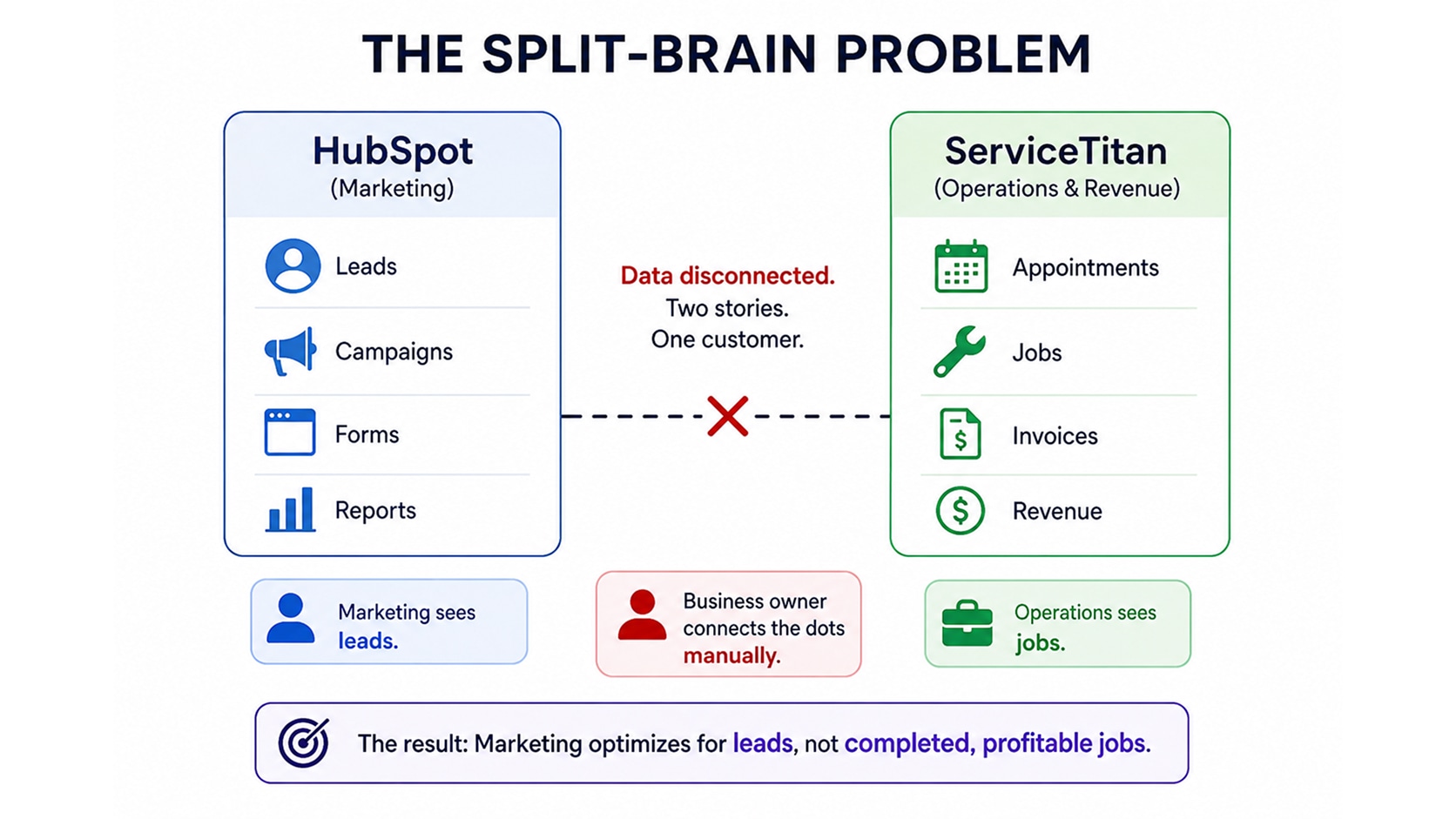
HubSpot knows the marketing story. It knows where a prospect came from, which page they visited, which form they submitted, and which campaign brought them into your funnel.
ServiceTitan knows what happened next. It knows whether that customer booked an appointment, which technician arrived, what work was performed, what equipment was installed, and — most importantly — what was actually invoiced.
The problem?
Those two stories often never become one story.
- Your marketing team sees leads.
- Your operations team sees jobs.
- Your finance team sees invoices.
- And the business owner is left trying to connect the dots manually.
That creates the classic "split-brain" database problem: one customer can exist as a marketing contact in one system and as a completely separate operational record somewhere else.
The result is predictable. Marketing optimizes for what it can see — leads, clicks, calls and forms — instead of what the business ultimately cares about:
Completed, profitable jobs.
Why your "attribution" may not tell the whole story
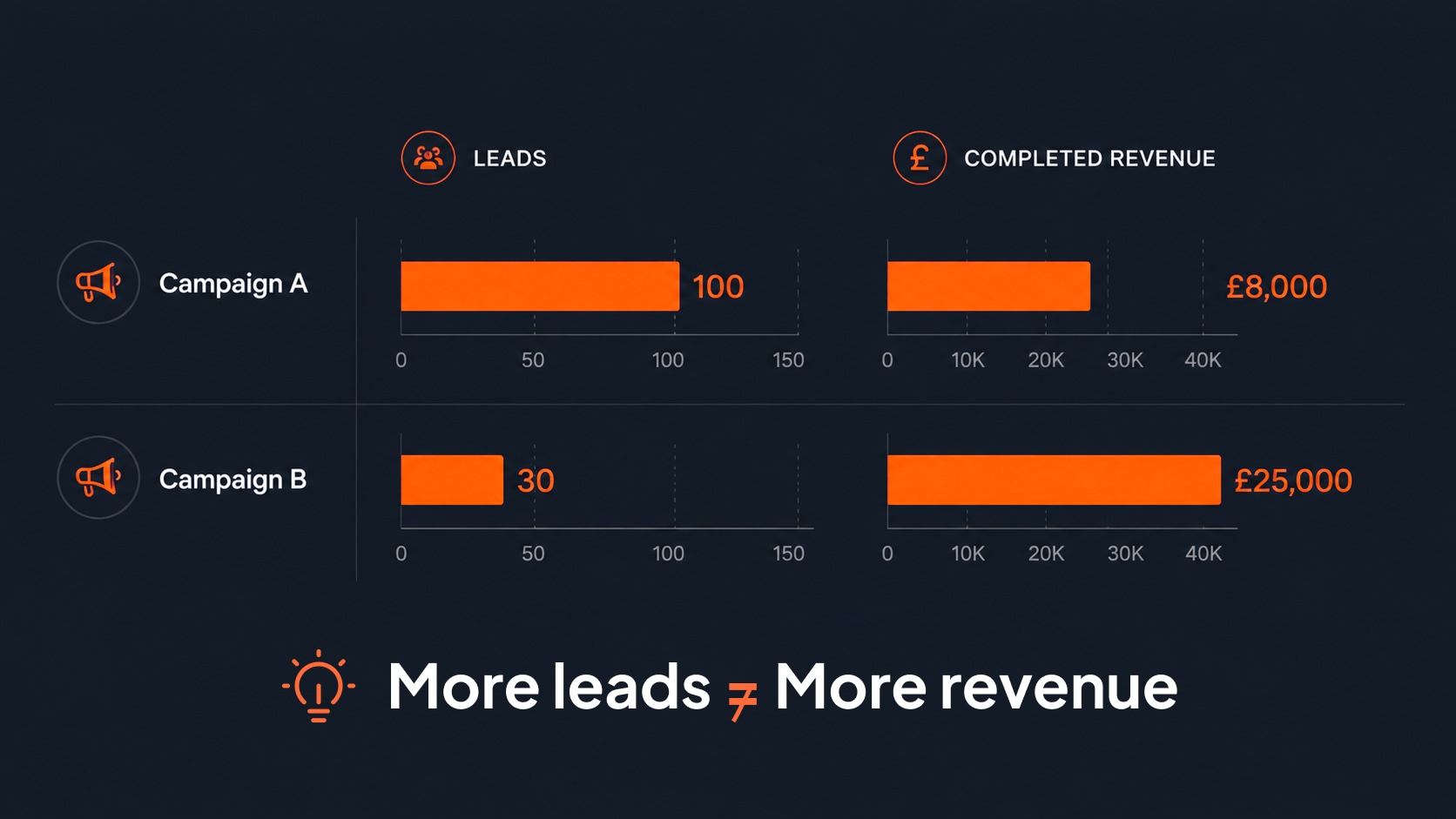
Imagine two campaigns.
Campaign A generates 100 leads but only produces £8,000 in completed work.
Campaign B generates just 30 leads, but those customers eventually generate £25,000 in revenue.
A lead-focused dashboard makes Campaign A look like the winner. Your bank account tells a very different story. That's why closed-loop attribution matters.
Instead of stopping at "Where did this lead come from?", you want to answer:
Where did this revenue come from?
That requires the entire customer journey to be connected.
Where traditional integrations start to crack
For years, contractors have tried to solve this problem with automation platforms and custom integrations.
At first, the setup looks simple:
New HubSpot Contact → Create ServiceTitan Customer
But real businesses aren't that simple. A homeowner might submit a form with one email address, call from another phone number, and already exist in ServiceTitan under their service address.
Suddenly, you have three records for one customer. That's where basic automation starts to struggle.
The "brittle pipe"
Tools such as Zapier and Make can be useful for straightforward workflows. But complex trade operations require more than:
If X Happens → Do Y
They need systems that understand existing records, reconcile identities, handle updates in both directions, and recover when an API call fails.
Without that intelligence, duplicate customers, missed updates, and broken workflows can quietly accumulate.
The custom middleware trap
The other option is building everything yourself.
It sounds attractive, until the development invoices arrive.
Custom middleware can require significant upfront development, ongoing maintenance, API monitoring, and engineering support. And every platform update becomes another potential maintenance project.
You didn't start an HVAC company to become the owner of an integration platform.
The goal: closed-loop marketing attribution
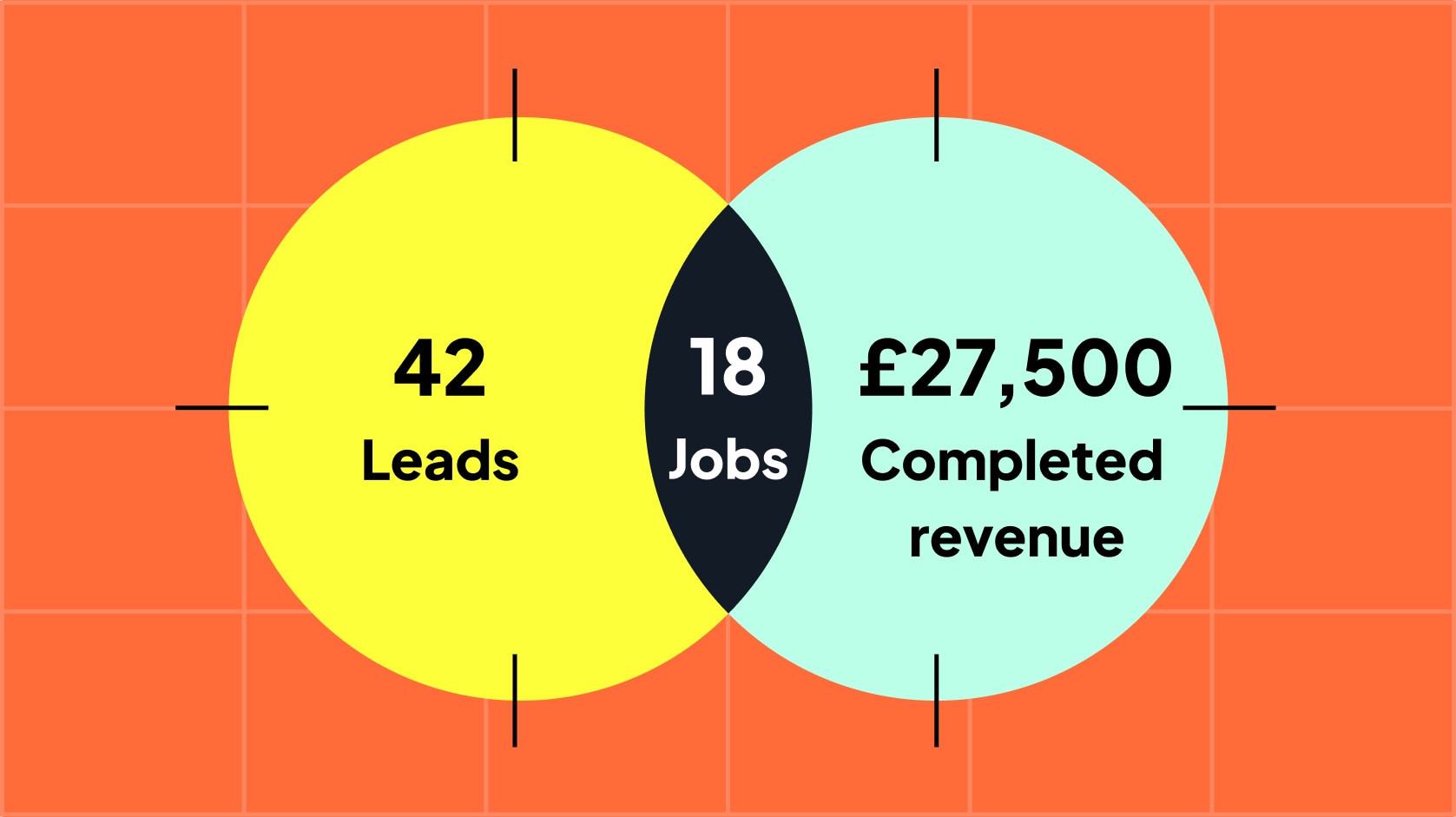
The ideal system completes the entire journey.
A homeowner searches Google for "furnace replacement near me." They click your campaign. They land on a HubSpot page and submit a form. The customer enters ServiceTitan.
An appointment is booked. A technician completes the installation. The invoice is closed.
And the actual revenue makes its way back into HubSpot.
Now your marketing dashboard tells a completely different story.
Instead of seeing:
Google Ads → 42 leads
you can start seeing:
Google Ads → 42 leads → 18 booked jobs → £27,500 completed revenue
That's the difference between lead attribution and revenue attribution. And that difference can completely change how you spend your marketing budget.
How synkazo closes the gap
This is where synkazo comes in.
synkazo is a productized integration engine designed to connect ServiceTitan and Dataforma with HubSpot and send supported Texada records one way into HubSpot, without forcing contractors to build and maintain their own middleware.
The idea is simple:
Connect the front office to the field. Then let the data tell the story.
Bidirectional customer sync
synkazo doesn't simply push new records from one system to another. It helps reconcile existing customer information using identifiers such as email and phone, reducing the risk of duplicate customer profiles.
Invoice-to-deal mapping
When operational activity reaches the point that matters most — the completed job and its revenue — the information can flow back into HubSpot.
That gives your sales and marketing teams visibility into what actually happened after the lead entered the funnel.
Built for high-volume operations
Trades businesses don't generate data at a perfectly predictable pace. During peak season, jobs, updates and transactions can spike dramatically.
A robust sync architecture needs to handle those volumes without silently dropping updates. Queueing, throttling and checkpointing help keep data moving even when systems hit API limits.
Reduce integration overhead
Instead of maintaining a bespoke integration stack, synkazo provides a pre-built connection designed around the systems contractors already use.
That means less engineering work, fewer moving parts and less time worrying about whether yesterday's integration is still working today.
The result: marketing finally meets revenue
The biggest change isn't another dashboard. It's the question your team can finally answer.
Where did our revenue come from?
Once ServiceTitan's operational data and HubSpot's marketing data are connected, you can start comparing campaigns based on completed business — not vanity metrics.
A campaign that generates fewer leads may turn out to be your most profitable channel. A campaign producing hundreds of inexpensive leads may turn out to generate very little revenue.
And a local listing, review campaign or specific ad group may quietly be responsible for a significant percentage of your completed jobs.
That's when attribution becomes useful. Not when it looks impressive. When it changes what you do next.
Stop managing two versions of the same customer
Your marketing team shouldn't have to guess what happened after a lead entered ServiceTitan.
Your dispatch team shouldn't have to wonder where a customer originally came from.
And your leadership team shouldn't need three spreadsheets and a Friday afternoon meeting to figure out whether last month's marketing budget actually worked.
Connect the systems. Connect the customer journey. Connect the revenue.
With synkazo, the goal is simple:
Turn disconnected marketing and operational data into one complete revenue story.
Because the most valuable marketing metric isn't the number of people who clicked. It's the number of customers who bought.
We’ll connect a sandbox and map one of your real objects on the call. Thirty minutes, no slide deck.
Request a demo